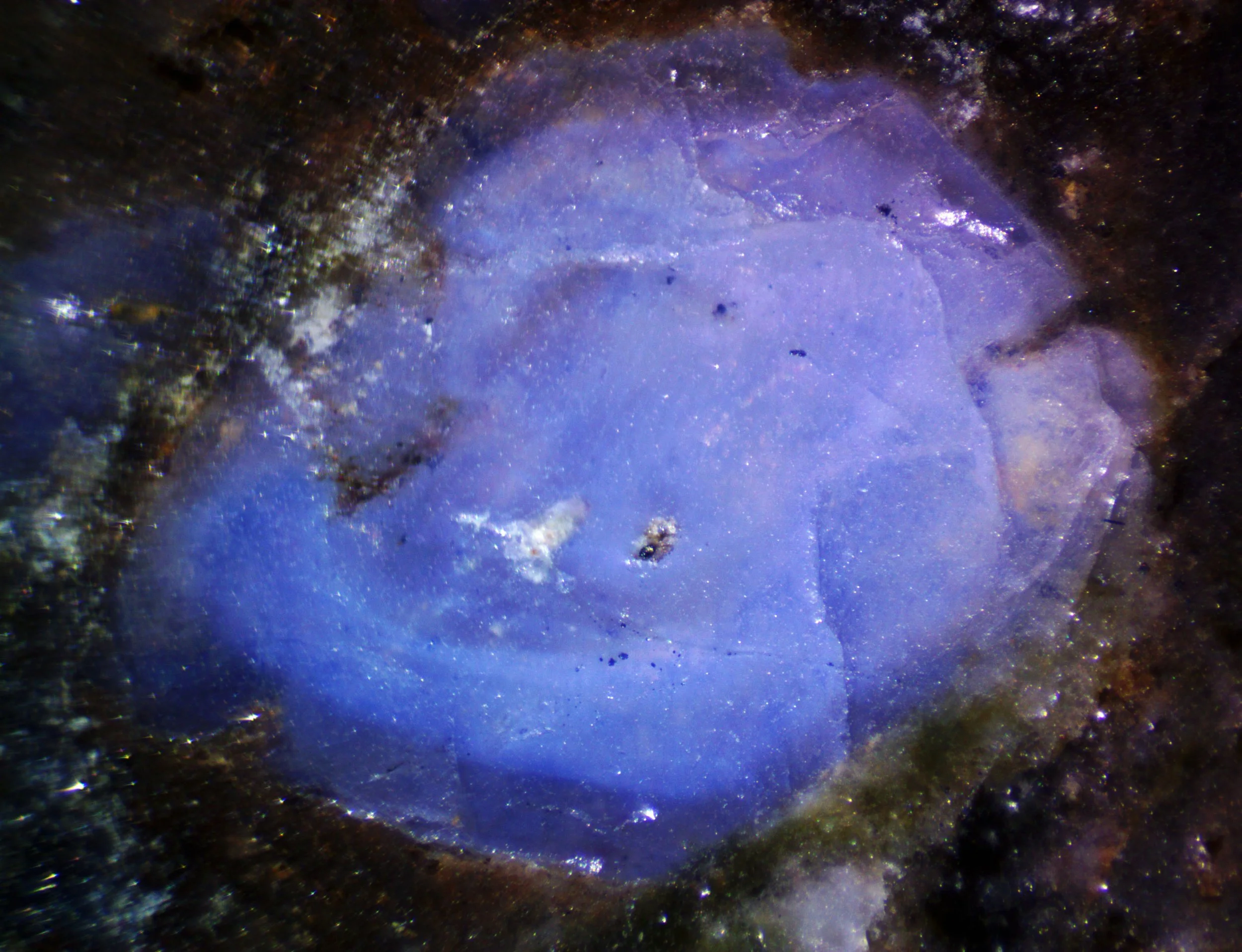
Blue quartz is one of geology's most captivating riddles. While its color has been loosely explained since the 19th century by the scattering of light from tiny inclusions, this answer is unsatisfyingly incomplete. In truth, our understanding has stagnated, leaving us with a beautiful phenomenon whose deeper meaning is entirely unknown.
The critical questions remain wide open. Geologists do not fully understand the precise physics of how light is scattered within the quartz, the exact nature and geological origin of the inclusions responsible, or why this phenomenon occurs in specific magmatic or metamorphic settings around the globe. This lack of a systematic framework means the geological significance of blue quartz is virtually untapped.
My mission is to move beyond this longstanding speculation and settle the issue. I am working to build a definitive understanding of blue quartz by connecting the dots from the microscopic to the global scale. This means determining the exact mechanism of light scattering, identifying the specific scattering centers and how they form, and unraveling the connection between their presence and the grand-scale geological processes that birth them. Ultimately, my goal is to synthesize these findings into a coherent interpretation of its global occurrence, transforming blue quartz from a mere curiosity into a valuable key for unlocking the history of the Earth.